





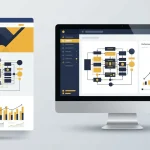

Enterprise architecture isn't just system diagrams — it's a tool for solving tangible business problems: duplicated effort, poor system integration, and difficulty making decisions based on reliable data. This article explains how architectural decisions translate into real operational impact, not just technical documentation sitting on a shelf.
Why Is Enterprise Architecture Seen as a Technical Luxury?
In many organizations, enterprise architecture gets reduced to complex diagrams and lengthy documents prepared by an isolated technical team, then filed away where no one revisits them. This misconception leads leadership to view enterprise architecture as a theoretical exercise not worth investing in, while daily operational problems keep piling up: the same data gets entered manually into more than one system, different teams make conflicting decisions due to the lack of a single source of truth, and every new technical project needs to rebuild integrations that have already been built — repeatedly.
Real enterprise architecture is the exact opposite: it's the tool that surfaces these problems clearly and lays out a practical roadmap to solve them permanently, not through repeated patchwork.
From Diagram to Operational Impact
Duplicated Effort Across Systems
When two employees in different departments manually enter the same customer data into two separate systems, that's not purely a technical problem — it's an architecture problem: the lack of a clear design for who owns each type of data, and how it flows between systems. Enterprise architecture solves this by establishing a single source of truth and designing integration that eliminates the need for double entry entirely.
Weak Integration Between Systems
Every undocumented, temporary integration between two systems is technical debt quietly piling up. The moment one of the systems gets updated, the integration breaks, and the technical team has to rush to fix it instead of building new value. Designing unified, documented APIs, as part of enterprise architecture, turns this debt into a technical asset you can build on with confidence.
Difficulty Making Decisions Based on Reliable Data
When two departments' reports show conflicting numbers for the same metric, management loses trust in the data altogether and reverts to gut-feel decisions instead of relying on the numbers. Good enterprise architecture ensures every metric has a single definition and a single trusted source across the entire organization.
What Does Effective Enterprise Architecture Look Like?
| Theoretical Architecture (Stays on the Shelf) | Effective Architecture (Translates Into Impact) |
|---|---|
| Documents and diagrams disconnected from daily business decisions | A roadmap directly tied to specific operational problems |
| Prepared by an isolated technical team without involving operations owners | Built collaboratively between business ownership and technical capability |
| Reviewed once, then abandoned | Continuously updated as business needs evolve |
| Focuses only on describing existing systems | Clearly defines how data flows and who owns each decision |
Practical Steps to Build Enterprise Architecture That Serves the Business
Start from existing operational problems
Collect the three or four most frequently repeated problems teams complain about daily, not a sweeping theoretical diagram.
Define the source of truth for each type of data
Who owns customer data? Who owns inventory data? A clear answer here resolves a large part of the conflicts that follow.
Design integrations as documented interfaces, not temporary fixes
Every connection between two systems should be documented and reusable, not a hidden script only one person understands.
Involve decision-makers in reviewing the roadmap
Enterprise architecture that operations owners don't understand will remain an isolated technical document, no matter how precise it is.
Review the roadmap periodically as the business evolves
Enterprise architecture isn't a project that ends — it's an ongoing practice that evolves with the organization's growth and needs.
Enterprise architecture isn't measured by the quality of its diagram, but by how many real operational problems it permanently solves. If the roadmap doesn't translate into tangible impact on daily operations, it's just another document on the shelf.
FAQ
Do small organizations need enterprise architecture too?
Yes, but sized to fit. A small organization doesn't need massive documentation, but it does need clarity on who owns each type of data and how its core systems integrate — even if that fits on one page instead of a hundred.
How do I convince leadership to invest in enterprise architecture if they see it as a luxury?
Tie every architectural recommendation directly to a tangible operational problem and its current cost, such as work hours lost to double data entry, instead of talking about enterprise architecture as an abstract theoretical concept.
Who should lead an enterprise architecture initiative within an organization?
The most effective choice is a solutions architect who understands both the technology and the business needs, working directly with operational decision-makers — not an isolated technical team disconnected from daily operational reality.
Is your organization facing recurring operational problems due to weak system integration? I'd be glad to discuss how enterprise architecture can genuinely solve them.
Contact MeThis article is part of my perspective on enterprise systems architecture, where I share detailed technical architecture case studies from real projects.
Work with me
Have a similar challenge on your plate?
I scope every engagement personally before any work starts.
- Business-driven technical architecture
- Experience across aviation, smart cities & e-commerce
- An initial call to understand the real problem first